
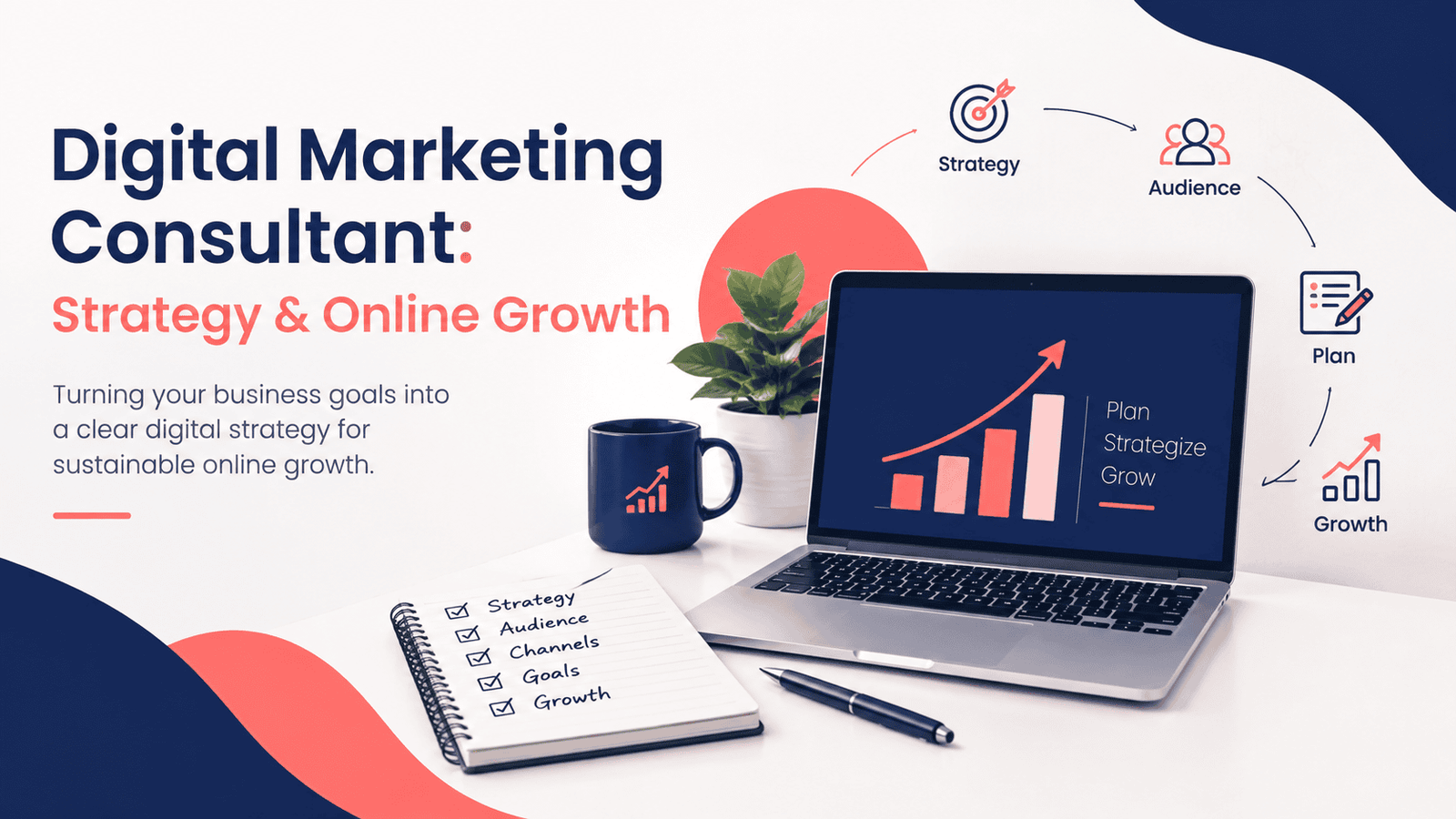
Businesses today need more than just an online presence. They need a clear digital marketing strategy that connects their business goals with the needs of their target audience. A digital marketing consultant helps businesses understand where they are online, identify opportunities for growth, and develop a strategic approach to reaching the right customers. Instead of focusing on individual marketing activities in isolation, a consultant looks at the bigger picture and helps create a structured path toward sustainable online growth. A digital marketing consultant is a professional who helps businesses improve their online presence, attract the right audience, generate leads, and achieve measurable business growth through digital marketing strategies. Rather than focusing on just one marketing channel, a consultant looks at the business as a whole and develops a strategy based on its goals, audience, competition, and online performance. What Is a Digital Marketing Consultant? A digital marketing consultant is a professional who helps businesses plan, develop, and improve their digital marketing approach. The role is not simply about promoting a business online. It involves understanding the business, its audience, competitors, goals, customer journey, and existing online presence before deciding what should be prioritized. A consultant can help businesses answer important questions such as: Who are our ideal customers? What are our main business goals? How do potential customers find us online? What influences their purchasing decisions? Which digital marketing activities should we prioritize? How should we measure our progress? How can we improve our online growth over time? Having clear answers to these questions creates a stronger foundation for digital marketing decisions. How to Choose a Digital Marketing Consultant When evaluating a consultant, businesses can consider: Experience and expertise: Look at their experience with businesses or industries similar to yours. Understanding of business goals: A good strategy should be connected to the company’s actual objectives rather than focusing only on individual marketing metrics. Strategic approach: Ask how they research the audience, competitors, market, and existing online performance before recommending actions. Measurement and reporting: Find out which KPIs they use and how they communicate progress. Communication: Clear communication is important because digital marketing often requires ongoing testing and adjustments. What Does a Digital Marketing Consultant Do? A digital marketing consultant can work across different areas of online marketing, depending on the needs of the business. 1. Understand Business Goals The first step is understanding what the business wants to achieve. Goals may include increasing brand awareness, generating leads, improving online visibility, increasing website conversions, reaching a new audience, or growing revenue. Marketing activities should support these business objectives rather than operate independently. 2. Analyze the Existing Online Presence A consultant evaluates the company’s current digital presence. This may include the website, search visibility, social media presence, content, advertising campaigns, analytics, and conversion paths. This analysis helps identify what is working, what needs improvement, and where new opportunities may exist. 3. Research the Target Audience Understanding the audience is an important part of developing an effective digital marketing strategy. A consultant may research: Customer needs and problems Search behavior Interests Buying motivations Online platforms Customer journey Common questions and objections This information can help businesses create more relevant content and marketing messages. 4. Research Competitors Competitor research helps businesses understand how other companies are positioning themselves online. A consultant may examine competitors’: Websites Content Search visibility Social media activity Advertising approaches Target audiences Marketing messages The goal is not simply to copy competitors, but to identify opportunities for differentiation and improvement. Why Continuous Optimization Matters Digital marketing is not a one-time activity. Search behavior, customer preferences, competitors, platforms, and market conditions can change over time. A consultant can use performance data to identify what should be improved and what should be tested. The process can be: Measure → Analyze → Improve → Test → Measure Again This creates a continuous improvement cycle. Why Is a Digital Marketing Strategy Important? Without a clear strategy, businesses may spend time and money on marketing activities that do not contribute directly to their objectives. A well-planned strategy helps businesses understand what they want to achieve, who they want to reach, which channels they should prioritize, and how they will measure success. A digital marketing strategy can help businesses: Establish clear marketing objectives Understand their target audience Identify suitable digital channels Create consistent marketing messages Prioritize marketing activities Allocate resources more effectively Measure marketing performance Identify opportunities for improvement Why Digital Marketing Strategy Matters Without a strategy, businesses may spend time and money on different online activities without knowing whether they are contributing to meaningful results. A strategy provides direction. It connects business objectives with marketing goals and creates a framework for making better decisions. For example, a business focused on increasing leads may need a different approach from a business focused primarily on building brand awareness. A well-developed digital marketing strategy for business growth should consider the business objectives, target audience, customer journey, competition, available resources, and measurable outcomes. This allows businesses to focus their efforts instead of trying to do everything at once. Business goal -> Target audience-> Digital Strategy-> Action Plan-> Measurement-> Online growth. Strategy vs Digital Marketing Plan t’s useful to clarify the difference on your pillar page: Digital marketing strategy explains the overall direction and approach. Digital marketing plan explains how that strategy will be put into action, including activities, timelines, responsibilities, and KPIs. This distinction is particularly useful for your pillar because it lets you link naturally to both of your cluster articles without making the pillar and clusters repetitive. Digital Marketing Consultant vs Digital Marketing Agency These terms are related but don’t necessarily describe the same type of working relationship. A digital marketing consultant generally focuses on strategic advice, analysis, planning, recommendations, and direction. A digital marketing agency typically operates as a team that may provide strategy as well as execution across multiple marketing services. The right option depends on the business’s requirements, internal resources, budget, and preferred level of external support. How to Choose a Digital Marketing