In today’s digital world, businesses have more opportunities than ever to connect with potential customers. However, simply being present online is not enough. Businesses need to choose the right digital marketing channels, understand their customers, and create relevant content that reaches people at the right time.
Whether you run a small business, a startup, or an established company, understanding how to target your audience can help you generate more traffic, build brand awareness, attract qualified leads, and increase conversions.
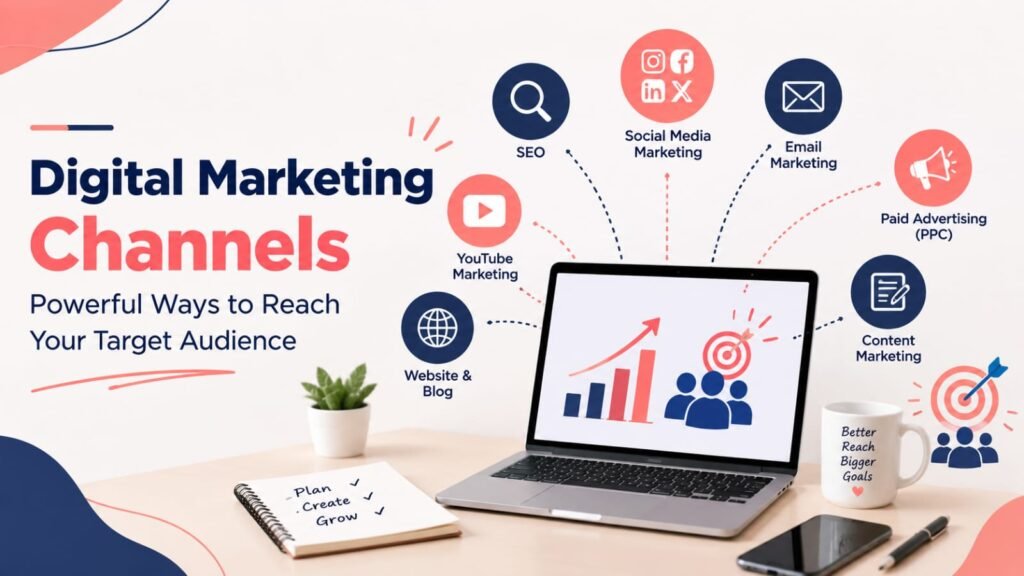
Digital marketing channels provide different ways to communicate with potential customers. Search engines can help people discover your business, social media can help you build relationships, email marketing can help you nurture leads, and content marketing can establish your brand as a trusted source of information.
The key is not to use every channel simply because it is available. Instead, you should identify where your audience spends time online and select channels that support your business goals.
In this guide, we will explore 15 powerful digital marketing channels and explain how each one can help you target your audience, build visibility, and grow your business online.
Digital marketing channels are online platforms, methods, and communication tools that businesses use to promote their products, services, content, or brand.
Some of the most common digital marketing channels include:
Each digital marketing channel has a different purpose and can reach customers at different stages of their buying journey.
For example, SEO can help you target your audience when they are actively searching for information, while social media can help you introduce your brand to people who may not know about your business yet.
Choosing the right combination of digital marketing channels allows you to create a more effective digital marketing strategy.
Search engine optimization is one of the most important digital marketing channels for businesses that want to attract organic traffic from search engines.
SEO involves optimizing your website and content so that search engines can understand your pages and show them to people searching for relevant information.
For example, if someone searches for “digital marketing consultant for small business,” a well-optimized website can appear in the search results for that query.
SEO can help you target your audience based on their search intent. You can create content around the questions, problems, and keywords your potential customers are already searching for.
Important areas of SEO include keyword research, on-page optimization, technical SEO, content optimization, internal linking, and link building.
The biggest advantage of SEO is that it can generate consistent organic traffic over time. However, SEO requires patience, regular content creation, and continuous optimization.
If your goal is to target your audience while building long-term visibility, SEO should be an important part of your digital marketing strategy.
Content marketing focuses on creating and distributing useful, relevant, and valuable content for your target customers.
Blog posts, guides, case studies, infographics, ebooks, videos, and tutorials are common examples of content marketing.
Instead of directly promoting a product or service in every piece of content, businesses can provide information that helps their audience solve problems.
For example, a digital marketing consultant could create articles about SEO, social media marketing, content marketing, website optimization, and online business growth.
The better you understand your audience, the easier it becomes to target your audience with content that answers their questions.
Before creating content, ask:
When content is created around these questions, it becomes more useful and relevant.
Social media marketing allows businesses to connect with customers through platforms such as Instagram, Facebook, LinkedIn, YouTube, and other social networks.
Social media can be used for brand awareness, engagement, lead generation, customer communication, and website traffic.
One of the major advantages of social media is the ability to target your audience based on interests, demographics, behaviors, location, and other characteristics.
For example, a local business can create content specifically for people in its service area. A B2B company may focus more heavily on LinkedIn, while a visually focused brand may benefit from Instagram or Pinterest.
The key to successful social media marketing is consistency. Instead of posting random promotional content, create content that educates, entertains, informs, and engages your audience.
Email marketing is one of the most effective channels for communicating directly with people who have already shown interest in your business.
Businesses can use email to share newsletters, educational content, product updates, special offers, event invitations, and personalized recommendations.
Email marketing allows you to target your audience based on their previous interactions with your business.
For example, you can create different email campaigns for:
Personalization can make email campaigns more relevant and increase engagement.
Instead of sending the same message to everyone, segment your audience and deliver information that matches their interests and needs.
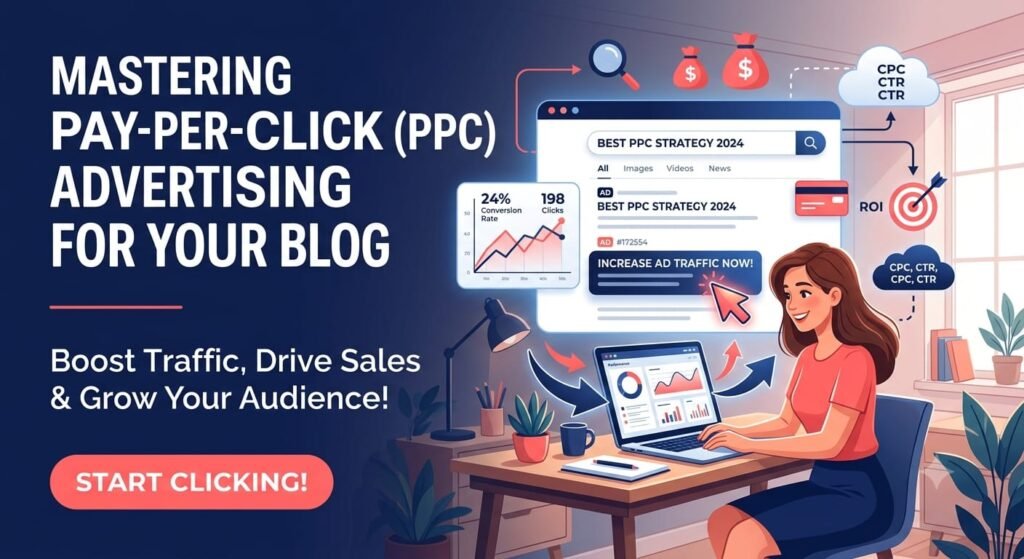
Pay-per-click advertising allows businesses to display paid advertisements on search engines and other digital platforms.
Unlike SEO, which generally takes time to build organic visibility, PPC can provide immediate visibility when campaigns are properly configured.
Businesses can target your audience through keywords, location, demographics, interests, devices, and other targeting options depending on the advertising platform.
For example, a business selling digital marketing services in Bangalore could create advertisements specifically for people searching for digital marketing services in that location.
PPC can be particularly useful when you want to generate traffic, leads, sales, or registrations quickly.
However, successful PPC requires careful keyword selection, compelling advertisements, optimized landing pages, budget management, and continuous performance monitoring.
Video has become an important digital marketing channel because people consume large amounts of video content online.
Businesses can use videos to explain products, demonstrate services, answer questions, share customer stories, provide tutorials, and educate their audience.
You can use platforms such as YouTube and social media to distribute video content.
Video marketing can help you target your audience by creating content around specific problems and interests.
For example, a digital marketing consultant could create videos explaining how to improve website SEO, how to create a content strategy, or how businesses can generate leads online.
Short-form videos can attract attention, while longer videos can provide detailed educational content.
Influencer marketing involves collaborating with people who have an established audience and influence within a particular niche.
Influencers can help businesses introduce their products or services to an audience that already trusts their recommendations.
The most important factor is relevance. A business should work with influencers whose audience matches its ideal customers.
If the influencer’s followers are interested in your industry, it becomes easier to target your audience with relevant messaging.
Businesses should evaluate an influencer based on audience quality, engagement, niche relevance, content quality, and authenticity rather than simply looking at follower numbers.
Affiliate marketing allows businesses to work with partners who promote their products or services and receive a commission for successful referrals.
For example, a blogger may recommend a product and provide a unique affiliate link. If someone purchases through that link, the affiliate receives a commission.
This model can help businesses reach new audiences without relying entirely on their own promotional channels.
To effectively target your audience, choose affiliates whose websites, social media profiles, or communities are relevant to your industry.
A relevant affiliate with a smaller but highly engaged audience can sometimes be more valuable than a large but unrelated audience.
Local SEO is especially important for businesses that serve customers in a specific geographical area.
Restaurants, consultants, salons, agencies, healthcare businesses, repair services, and local retailers can use local SEO to improve their visibility when nearby customers search for relevant services.
For example, someone searching for “digital marketing consultant in Bangalore” has a clear local intent.
Businesses can target your audience locally by optimizing their website, creating location-specific content, maintaining accurate business information, and building a strong local online presence.
Local SEO can help businesses attract customers who are more likely to visit a physical location or purchase a service in their area.
Online communities provide another opportunity to connect with people who share specific interests, challenges, or professional goals.
These communities can exist on social media platforms, discussion forums, professional networks, and niche websites.
Instead of continuously promoting your business, focus on answering questions and providing useful information.
When you consistently contribute valuable insights, people may begin to recognize your expertise and visit your website.
Community marketing is therefore a useful way to target your audience based on shared interests and problems.
The most important rule is to avoid spam. Communities respond better to genuine participation than aggressive promotion.
People spend a significant amount of time using smartphones, making mobile marketing an important part of digital marketing.
Mobile marketing can include SMS campaigns, mobile-friendly websites, app notifications, mobile advertising, and other smartphone-focused experiences.
Your website should also provide a good experience on mobile devices.
If users cannot easily read your content, navigate your website, or complete an action on their phones, you may lose potential customers.
To effectively target your audience, make sure your content, advertisements, landing pages, and website experience work well across different screen sizes.
Display advertising uses visual advertisements such as banners, images, and interactive advertisements across websites and digital platforms.
Display ads can be useful for building awareness and introducing your brand to potential customers.
Businesses can use audience targeting to show advertisements to people based on characteristics such as interests, demographics, browsing behavior, and previous interactions.
Creative design plays an important role in display advertising.
Your advertisement should communicate the main message quickly and include a clear call to action.
When you target your audience with relevant advertisements instead of showing generic messages to everyone, your campaigns can become more effective.
Remarketing focuses on reaching people who have previously interacted with your business.
For example, someone may visit your website, look at a service page, and leave without contacting you.
Remarketing can help you reconnect with that person later through advertisements.
This is useful because the person has already demonstrated some level of interest in your business.
Remarketing can help you target your audience based on previous behavior rather than simply targeting a broad group of potential customers.
However, advertisements should be managed carefully. Showing the same advertisement too frequently can create a poor user experience.
Webinars and online events can help businesses educate their audience while demonstrating their knowledge and expertise.
A consultant, agency, coach, software company, or professional service provider can organize webinars around topics that are important to potential customers.
For example, a digital marketing consultant could host a webinar about creating a digital marketing strategy for small businesses.
Webinars allow businesses to target your audience around a specific problem or topic.
They can also help generate qualified leads because people who register for a webinar have already shown interest in the subject.
After the event, you can continue communicating with attendees through email and other marketing channels.
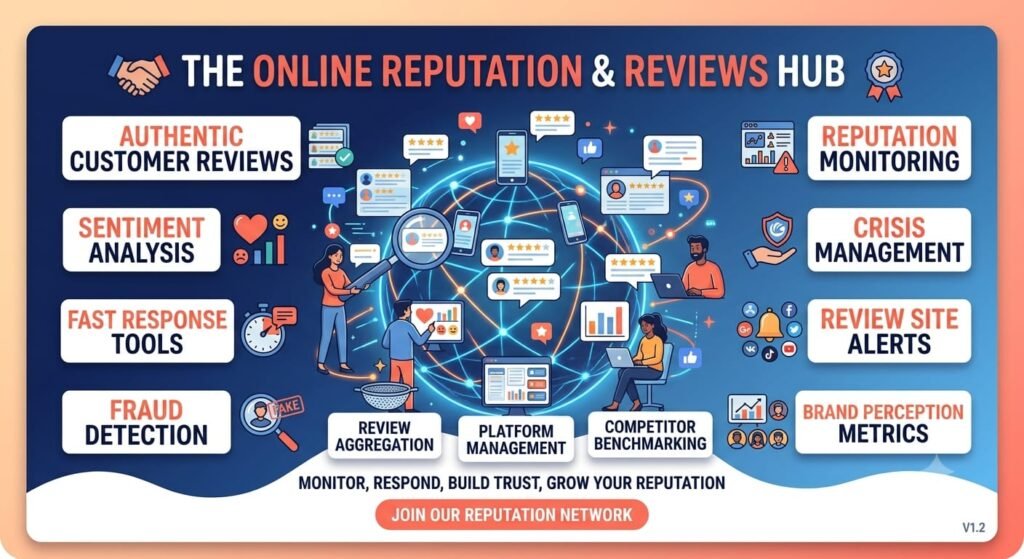
Online reviews are another important part of digital marketing.
Before purchasing a product or service, many customers look for reviews and opinions from other people.
Positive reviews can increase trust, while negative reviews can influence a customer’s decision.
Businesses should monitor their online reputation, encourage satisfied customers to leave honest feedback, and respond professionally to customer concerns.
Reviews can help you target your audience indirectly because people searching for your business are often already interested in your products or services.
A strong reputation can therefore support other digital marketing channels such as SEO, social media, local search, and paid advertising.
After selecting your digital marketing channels, you need to determine how you will use them.
Start with your business objectives. Your objective could be increasing website traffic, generating leads, improving brand awareness, increasing sales, or retaining existing customers.
Next, identify your audience and understand their customer journey.
Then select the digital marketing channels that can help you achieve your objectives.
For example:
Goal: Increase organic website traffic
Channels: SEO + Content Marketing
Goal: Generate immediate leads
Channels: PPC + Landing Pages
Goal: Build brand awareness
Channels: Social Media + Video Marketing
Goal: Retain existing customers
Channels: Email Marketing + Remarketing
This approach prevents you from spending time and money on channels that do not support your objectives.
You can also connect different channels together.
For example, you could create a blog post through content marketing, optimize it for SEO, promote it on social media, send it to your email subscribers, and use remarketing to reach visitors who did not convert.
This creates a connected digital marketing system rather than isolated campaigns.
Choosing the right digital marketing channels is only the beginning. You also need to measure their performance.
Different digital marketing channels require different metrics.
For SEO, you can monitor in digital marketing channel:
For social media, you can measure in digital marketing channel:
For email marketing, useful metrics include in digital marketing channel :
For PPC, you can monitor in digital marketing channel:
These measurements help you understand which channels are producing results.
If a particular channel is performing well, you can invest more resources into it. If another channel is not generating meaningful results, you can test different strategies or reconsider whether it is the right channel for your audience.
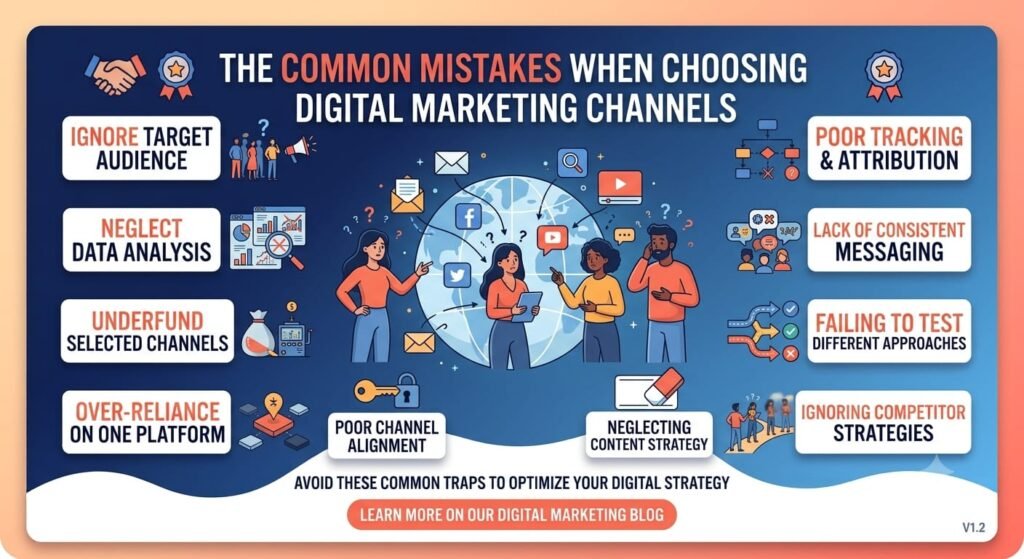
Businesses can make several mistakes when developing their digital marketing channel strategy.
One common mistake is trying to use every platform at the same time.
Another mistake is focusing only on the number of followers or website visitors instead of measuring actual business results.
Some businesses also create content without understanding their audience.
If your content does not solve a problem or answer a question, it may not attract the people you want.
Another mistake is failing to maintain consistency. Digital marketing channel generally requires continuous testing, optimization, and improvement.
Finally, businesses sometimes select channels based on trends rather than customer behavior.
A channel may be popular, but that does not mean it is the right channel for your business.
Always start with your customers and determine where you can effectively target your audience.
Selecting and managing digital marketing channels can become complicated as your business grows.
A digital marketing consultant can help you understand your business objectives, analyze your audience, identify suitable channels, develop a strategy, and measure campaign performance.
Instead of using every available platform, a consultant can help you prioritize channels based on your audience and goals.
For example, a business may benefit more from SEO and content marketing than from spending heavily on social media advertising.
A consultant can also help connect different channels so that they work together.
The goal is to create a marketing system where your SEO, content, social media, email, advertising, and other channels support each other.
This approach can make it easier to target your audience, generate qualified traffic, and turn visitors into customers.
Digital marketing provides businesses with many ways to connect with potential customers. From SEO and content marketing to social media, email, PPC, video marketing, and remarketing, each digital marketing channel can play a different role in your overall strategy.
However, successful digital marketing is not about using as many digital marketing channels as possible.
It is about understanding your customers and choosing the digital marketing channels that allow you to reach them effectively.
Before selecting a digital marketing channel, understand who your customers are, what they need, what problems they are trying to solve, and where they spend their time online.
When you target your audience with relevant content, useful information, and the right message, your marketing efforts become more focused and meaningful.
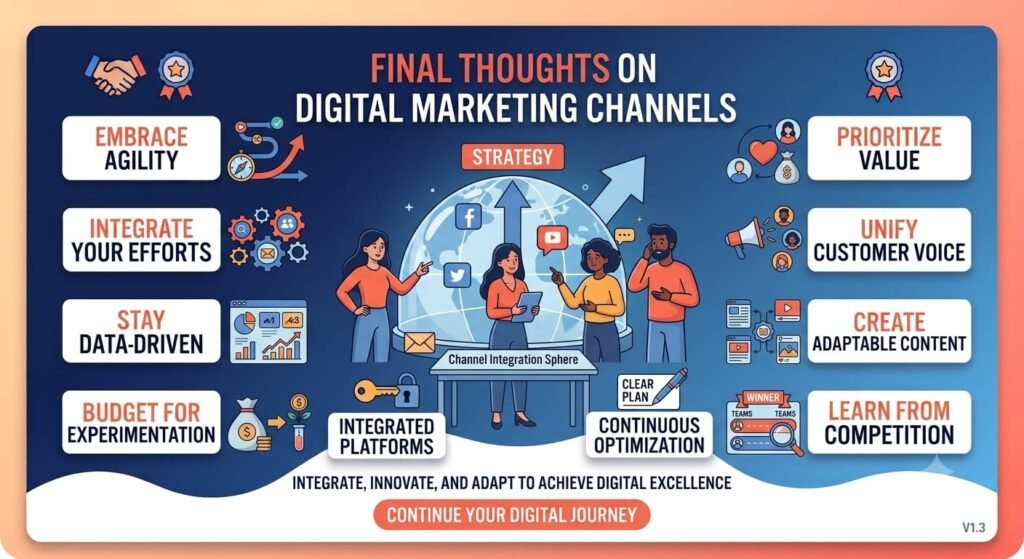
Start with your business goals, research your audience, select the most relevant channels, measure your results, and continuously improve your strategy.
If you want to learn how a digital marketing consultant can help you create a focused online growth strategy, explore Digital Marketing Consultant: Strategy and Online Growth. You can also learn how to develop a complete Digital Marketing Strategy for Business Growth and turn that strategy into an actionable Digital Marketing Plan.
The right digital marketing channels, combined with a clear strategy and consistent optimization, can help you build stronger online visibility, reach the right people, and create sustainable business growth digital marketing channel
© 2026 R Disha. All Right Reserved.
Ready to get started? Chat with us on WhatsApp!