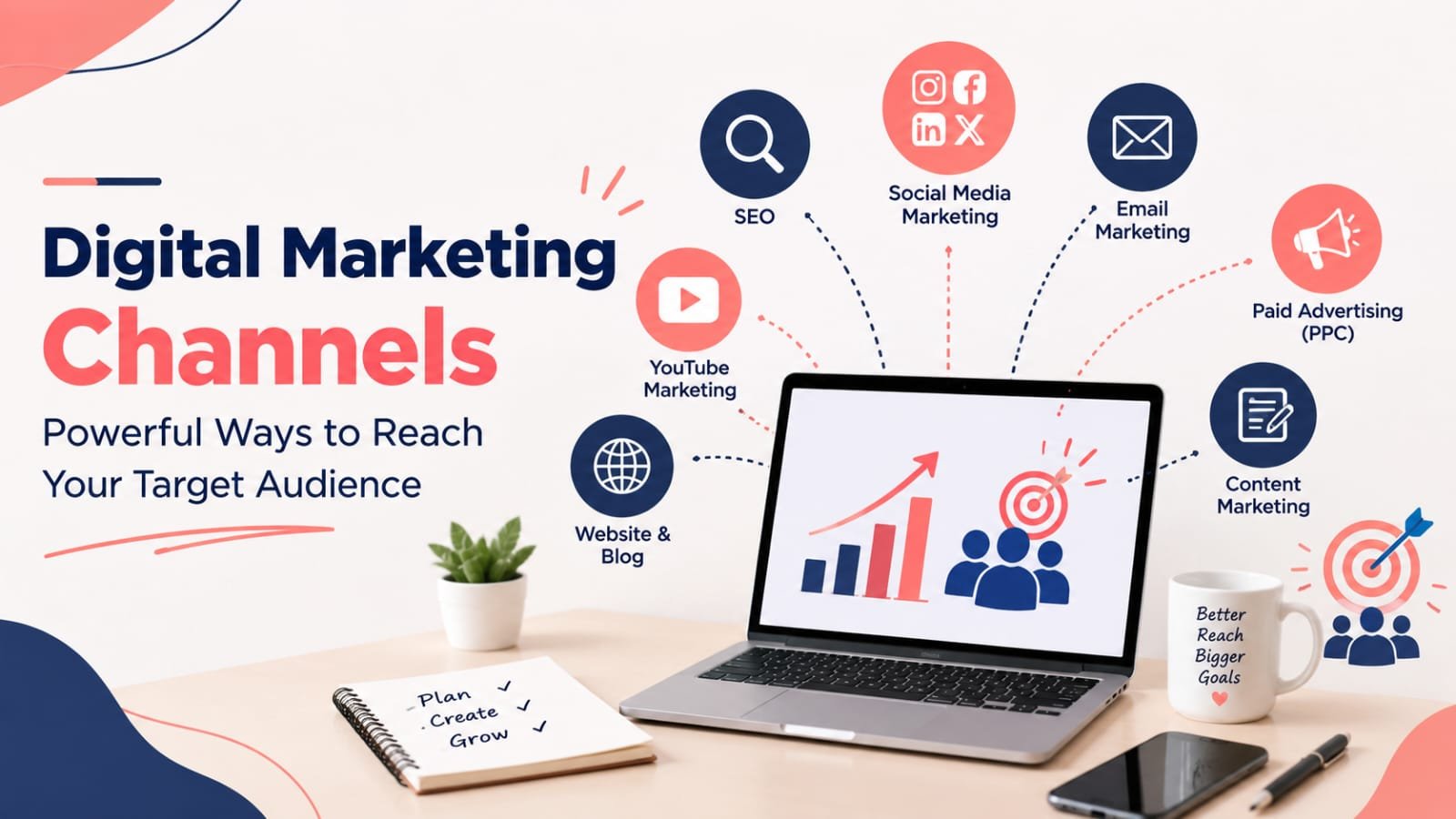
In today’s digital world, businesses have more opportunities than ever to connect with potential customers. However, simply being present online is not enough. Businesses need to choose the right digital marketing channels, understand their customers, and create relevant content that reaches people at the right time. Whether you run a small business, a startup, or an established company, understanding how to target your audience can help you generate more traffic, build brand awareness, attract qualified leads, and increase conversions. Digital marketing channels provide different ways to communicate with potential customers. Search engines can help people discover your business, social media can help you build relationships, email marketing can help you nurture leads, and content marketing can establish your brand as a trusted source of information. The key is not to use every channel simply because it is available. Instead, you should identify where your audience spends time online and select channels that support your business goals. In this guide, we will explore 15 powerful digital marketing channels and explain how each one can help you target your audience, build visibility, and grow your business online. What Are Digital Marketing Channels? Digital marketing channels are online platforms, methods, and communication tools that businesses use to promote their products, services, content, or brand. Some of the most common digital marketing channels include: Search engine optimization (SEO) Content marketing Social media marketing Email marketing Pay-per-click advertising Video marketing Influencer marketing Affiliate marketing Local SEO Online communities Mobile marketing Display advertising Remarketing Webinars and online events Online reviews and reputation management Each digital marketing channel has a different purpose and can reach customers at different stages of their buying journey. For example, SEO can help you target your audience when they are actively searching for information, while social media can help you introduce your brand to people who may not know about your business yet.Choosing the right combination of digital marketing channels allows you to create a more effective digital marketing strategy. 15 Powerful Digital Marketing Channels to Reach Your Target Audience 1. Search Engine Optimization (SEO) Search engine optimization is one of the most important digital marketing channels for businesses that want to attract organic traffic from search engines. SEO involves optimizing your website and content so that search engines can understand your pages and show them to people searching for relevant information. For example, if someone searches for “digital marketing consultant for small business,” a well-optimized website can appear in the search results for that query. SEO can help you target your audience based on their search intent. You can create content around the questions, problems, and keywords your potential customers are already searching for. Important areas of SEO include keyword research, on-page optimization, technical SEO, content optimization, internal linking, and link building. The biggest advantage of SEO is that it can generate consistent organic traffic over time. However, SEO requires patience, regular content creation, and continuous optimization. If your goal is to target your audience while building long-term visibility, SEO should be an important part of your digital marketing strategy. 2. Content Marketing Content marketing focuses on creating and distributing useful, relevant, and valuable content for your target customers. Blog posts, guides, case studies, infographics, ebooks, videos, and tutorials are common examples of content marketing. Instead of directly promoting a product or service in every piece of content, businesses can provide information that helps their audience solve problems. For example, a digital marketing consultant could create articles about SEO, social media marketing, content marketing, website optimization, and online business growth. The better you understand your audience, the easier it becomes to target your audience with content that answers their questions. Before creating content, ask: What problems does my audience have? What questions are they asking? What information are they searching for? What type of content do they prefer? What stage of the buying journey are they in? When content is created around these questions, it becomes more useful and relevant. 3. Social Media Marketing Social media marketing allows businesses to connect with customers through platforms such as Instagram, Facebook, LinkedIn, YouTube, and other social networks. Social media can be used for brand awareness, engagement, lead generation, customer communication, and website traffic. One of the major advantages of social media is the ability to target your audience based on interests, demographics, behaviors, location, and other characteristics. For example, a local business can create content specifically for people in its service area. A B2B company may focus more heavily on LinkedIn, while a visually focused brand may benefit from Instagram or Pinterest. The key to successful social media marketing is consistency. Instead of posting random promotional content, create content that educates, entertains, informs, and engages your audience. 4. Email Marketing Email marketing is one of the most effective channels for communicating directly with people who have already shown interest in your business. Businesses can use email to share newsletters, educational content, product updates, special offers, event invitations, and personalized recommendations. Email marketing allows you to target your audience based on their previous interactions with your business. For example, you can create different email campaigns for: New subscribers Existing customers Potential customers Repeat buyers People who abandoned their shopping carts People interested in a particular product Personalization can make email campaigns more relevant and increase engagement. Instead of sending the same message to everyone, segment your audience and deliver information that matches their interests and needs. 5. Pay-Per-Click Advertising (PPC) Pay-per-click advertising allows businesses to display paid advertisements on search engines and other digital platforms. Unlike SEO, which generally takes time to build organic visibility, PPC can provide immediate visibility when campaigns are properly configured. Businesses can target your audience through keywords, location, demographics, interests, devices, and other targeting options depending on the advertising platform. For example, a business selling digital marketing services in Bangalore could create advertisements specifically for people searching for digital marketing services in that location. PPC can be particularly useful when you want to generate traffic, leads, sales, or