
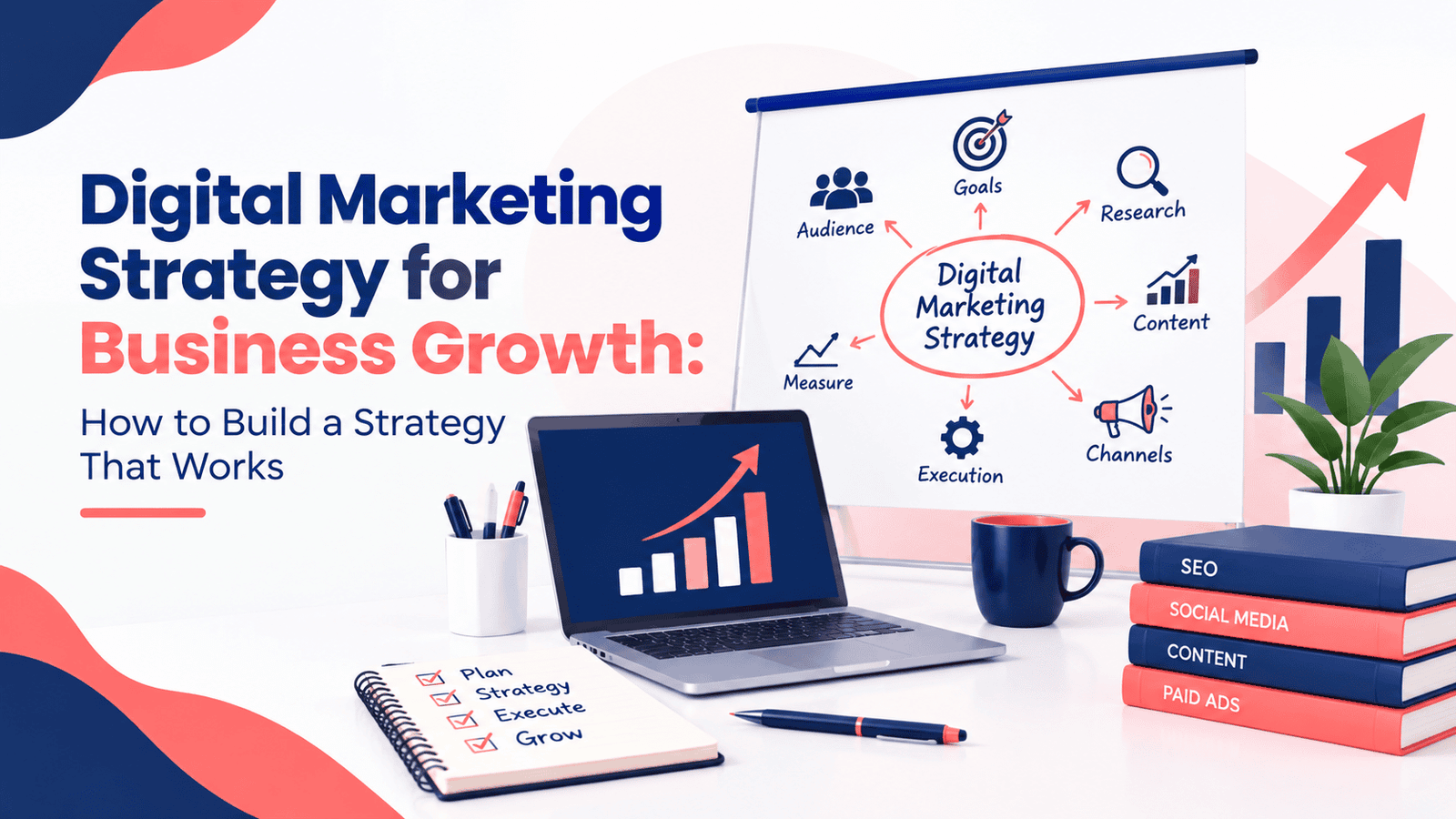
In today’s digital marketplace, having an online presence is no longer enough. Businesses need a clear direction to attract the right audience, build trust, generate customers, and achieve sustainable growth. A digital marketing strategy for business growth provides that direction. It helps businesses understand their goals, target audience, customer journey, competitors, and marketing priorities before deciding what actions to take. Instead of trying different marketing activities without a clear purpose, a strategic approach allows businesses to make informed decisions and focus their resources where they can have the greatest impact. What Is a Digital Marketing Strategy? A digital marketing strategy is a structured approach that connects your business goals with your online marketing activities. It answers important questions such as: What does the business want to achieve? Who are the ideal customers? What problems are customers trying to solve? How do potential customers find the business? What makes the business different from competitors? Which marketing activities should be prioritized? How will success be measured? A strategy provides the overall direction for your digital marketing efforts. Your digital marketing plan then turns that strategy into specific actions, timelines, and priorities. Why Is Digital Marketing Strategy Important for Business Growth? Without a clear digital marketing strategy, businesses may spend time and money on different online activities without understanding how those activities contribute to business growth. A well-defined digital marketing strategy helps you: Focus on the right audience Set realistic marketing goals Prioritize marketing activities Use your resources effectively Create consistent messaging Understand the customer journey Measure meaningful results Identify opportunities for improvement The goal isn’t simply to become more visible online. The goal is to turn online visibility into meaningful business outcomes such as leads, customers, sales, and long-term growth. 1. Start With Clear Business Goals Your digital marketing strategy should begin with your business objectives. Ask yourself: What do I want my business to achieve? Your goals could include: Increasing qualified leads Generating more enquiries Increasing sales Building brand awareness Reaching a new audience Improving customer retention Increasing website conversions Growing your online customer base For example, instead of saying: “I want more website traffic.” a stronger objective would be: “I want to attract more qualified visitors who are likely to become customers.” This gives your digital marketing strategy a clear direction. 2. Understand Your Target Audience The next step is understanding who you want to reach. Your target audience isn’t simply a group defined by age or location. You should understand their: Problems Needs Interests Goals Search behavior Buying motivations Concerns Decision-making process For example, if your target audience is small business owners, they may be looking for ways to: Generate more customers Increase online visibility Compete with larger businesses Build credibility Improve their online presence Understanding these needs allows you to create a strategy that focuses on what your customers actually care about. 3. Understand the Customer Journey Customers usually don’t go directly from discovering a business to becoming a customer. They may move through several stages: Awareness → Consideration → Decision → Conversion → Retention At the awareness stage, someone may be searching for information. During consideration, they may compare different solutions. At the decision stage, they may look at pricing, reviews, credibility, and other factors. Your digital marketing strategy should consider each stage. For example: Awareness: Educational content Consideration: Guides, comparisons, case studies Decision: Service information, reviews, FAQs Conversion: Contact forms, enquiries, purchases Retention: Follow-up communication and useful content This helps create a more complete customer experien 4. Research Your Competitors Competitor research can help you identify opportunities. Look at: Their websites Content Marketing messages Target audience Online visibility Customer reviews Strengths Weaknesses You don’t need to copy what competitors are doing. Instead, ask: What are they doing well? Where are they missing opportunities? What questions are they not answering? How can my business provide more useful information? These insights can help you develop a strategy that differentiates your business. 5. Choose Your Digital Marketing Priorities A common mistake is trying to do everything at once. A better strategy is to determine which activities are most relevant to your goals and audience. Consider: Your business objectives Target audience Budget Available resources Competition Current online presence Expected business impact For example, a new business may need to focus on building awareness and credibility, while an established business may need to focus more heavily on generating qualified leads and improving conversions. Your strategy should be based on business needs, not simply on what’s trending. 6. Create Content Around Your Audience’s Needs Content should support your overall strategy. Instead of publishing content simply to have something new on your website, create content that answers your audience’s questions. You can organize content around different stages of the customer journey. Awareness What is digital marketing? How can a business grow online? Digital marketing trends Consideration How to create a digital marketing strategy Digital marketing strategies for small businesses How to choose the right marketing approach Decision How to choose a digital marketing consultant Questions to ask a digital marketing consultant How to measure digital marketing results This creates a content system that supports customers throughout their journey. 7. Turn Your Strategy Into a Digital Marketing Plan A strong digital marketing strategy gives your business direction, but the next step is turning that strategy into an actionable plan. A digital marketing plan helps you organize your activities, establish a realistic timeline, prioritize your actions, and determine how you will measure progress. If you want to learn how to turn your strategy into an actionable roadmap, read our guide on [How to Build a Digital Marketing Plan: Steps, Timeline & KPIs]. Once you have established: Your business goals Target audience Customer journey Competitor insights Marketing priorities Content direction you need to turn those decisions into specific actions, want to know about how to plan digital marketing. This is the difference between a strategy and a plan. Strategy answers : “Where do we want to go and why?” Plan answers: