
IntroductionExplain how businesses in [Location] are increasingly using digital channels to attract customers, generate leads, and build their brand. Introduce the role of a digital marketing freelancer and how they can provide flexible, cost-effective marketing support. 1. Why Digital Marketing Matters for Businesses in {Location}Discuss the importance of having an online presence, reaching local customers, competing with other businesses, and generating consistent leads through digital channels. 2. How a Digital Marketing Freelancer Can Help Your BusinessCover areas such as: 3. Improve Your Local Online VisibilityExplain how businesses can target customers searching for products or services in [Location]. Mention local SEO, location-based keywords, Google Business Profile, customer reviews, and local content. 4. Build a Strong SEO StrategyExplain how a freelancer can research relevant keywords, optimize website pages, create SEO-friendly content, improve technical SEO, and build backlinks. 5. Reach Customers Through Social MediaDiscuss platforms such as Instagram, Facebook, LinkedIn, and YouTube, depending on the business’s target audience. 6. Create Content That Attracts CustomersExplain how blogs, videos, social media posts, guides, and educational content can help businesses build trust and attract potential customers. 7. Generate More Leads and SalesTalk about using landing pages, calls-to-action, lead forms, advertisements, and conversion optimization to turn website visitors into customers. 8. Why Hire a Freelancer Instead of an Agency?You can discuss benefits such as: 9. How to Choose a Digital Marketing Freelancer in {Location}Give readers practical factors to consider: experience, portfolio, SEO knowledge, communication, reporting, pricing, and understanding of their industry. 10. Measure Your Digital Marketing ResultsExplain metrics such as: ConclusionEnd by explaining that businesses in {Location} can use a well-planned digital marketing strategy to increase visibility, attract the right audience, and achieve sustainable online growth. digital marketing freelance in mysore
Digital Marketing Freelancer in Chennai: How to Grow Your Business Online
IntroductionExplain how businesses in [Location] are increasingly using digital channels to attract customers, generate leads, and build their brand. Introduce the role of a digital marketing freelancer and how they can provide flexible, cost-effective marketing support. 1. Why Digital Marketing Matters for Businesses in {Location}Discuss the importance of having an online presence, reaching local customers, competing with other businesses, and generating consistent leads through digital channels. 2. How a Digital Marketing Freelancer Can Help Your BusinessCover areas such as: 3. Improve Your Local Online VisibilityExplain how businesses can target customers searching for products or services in [Location]. Mention local SEO, location-based keywords, Google Business Profile, customer reviews, and local content. 4. Build a Strong SEO StrategyExplain how a freelancer can research relevant keywords, optimize website pages, create SEO-friendly content, improve technical SEO, and build backlinks. 5. Reach Customers Through Social MediaDiscuss platforms such as Instagram, Facebook, LinkedIn, and YouTube, depending on the business’s target audience. 6. Create Content That Attracts CustomersExplain how blogs, videos, social media posts, guides, and educational content can help businesses build trust and attract potential customers. 7. Generate More Leads and SalesTalk about using landing pages, calls-to-action, lead forms, advertisements, and conversion optimization to turn website visitors into customers. 8. Why Hire a Freelancer Instead of an Agency?You can discuss benefits such as: 9. How to Choose a Digital Marketing Freelancer in {Location}Give readers practical factors to consider: experience, portfolio, SEO knowledge, communication, reporting, pricing, and understanding of their industry. 10. Measure Your Digital Marketing ResultsExplain metrics such as: ConclusionEnd by explaining that businesses in {Location} can use a well-planned digital marketing strategy to increase visibility, attract the right audience, and achieve sustainable online growth. digital marketing freelance in chennai
Digital Marketing Freelancer in Mumbai: How to Grow Your Business Online
IntroductionExplain how businesses in [Location] are increasingly using digital channels to attract customers, generate leads, and build their brand. Introduce the role of a digital marketing freelancer and how they can provide flexible, cost-effective marketing support. 1. Why Digital Marketing Matters for Businesses in {Location}Discuss the importance of having an online presence, reaching local customers, competing with other businesses, and generating consistent leads through digital channels. 2. How a Digital Marketing Freelancer Can Help Your BusinessCover areas such as: 3. Improve Your Local Online VisibilityExplain how businesses can target customers searching for products or services in [Location]. Mention local SEO, location-based keywords, Google Business Profile, customer reviews, and local content. 4. Build a Strong SEO StrategyExplain how a freelancer can research relevant keywords, optimize website pages, create SEO-friendly content, improve technical SEO, and build backlinks. 5. Reach Customers Through Social MediaDiscuss platforms such as Instagram, Facebook, LinkedIn, and YouTube, depending on the business’s target audience. 6. Create Content That Attracts CustomersExplain how blogs, videos, social media posts, guides, and educational content can help businesses build trust and attract potential customers. 7. Generate More Leads and SalesTalk about using landing pages, calls-to-action, lead forms, advertisements, and conversion optimization to turn website visitors into customers. 8. Why Hire a Freelancer Instead of an Agency?You can discuss benefits such as: 9. How to Choose a Digital Marketing Freelancer in {Location}Give readers practical factors to consider: experience, portfolio, SEO knowledge, communication, reporting, pricing, and understanding of their industry. 10. Measure Your Digital Marketing ResultsExplain metrics such as: ConclusionEnd by explaining that businesses in {Location} can use a well-planned digital marketing strategy to increase visibility, attract the right audience, and achieve sustainable online growth. digital marketing freelance in Mumbai
Digital Marketing Freelancer in Banglore: How to Grow Your Business Online
IntroductionExplain how businesses in [Location] are increasingly using digital channels to attract customers, generate leads, and build their brand. Introduce the role of a digital marketing freelancer and how they can provide flexible, cost-effective marketing support. 1. Why Digital Marketing Matters for Businesses in {Location}Discuss the importance of having an online presence, reaching local customers, competing with other businesses, and generating consistent leads through digital channels. 2. How a Digital Marketing Freelancer Can Help Your BusinessCover areas such as: 3. Improve Your Local Online VisibilityExplain how businesses can target customers searching for products or services in [Location]. Mention local SEO, location-based keywords, Google Business Profile, customer reviews, and local content. 4. Build a Strong SEO StrategyExplain how a freelancer can research relevant keywords, optimize website pages, create SEO-friendly content, improve technical SEO, and build backlinks. 5. Reach Customers Through Social MediaDiscuss platforms such as Instagram, Facebook, LinkedIn, and YouTube, depending on the business’s target audience. 6. Create Content That Attracts CustomersExplain how blogs, videos, social media posts, guides, and educational content can help businesses build trust and attract potential customers. 7. Generate More Leads and SalesTalk about using landing pages, calls-to-action, lead forms, advertisements, and conversion optimization to turn website visitors into customers. 8. Why Hire a Freelancer Instead of an Agency?You can discuss benefits such as: 9. How to Choose a Digital Marketing Freelancer in {Location}Give readers practical factors to consider: experience, portfolio, SEO knowledge, communication, reporting, pricing, and understanding of their industry. 10. Measure Your Digital Marketing ResultsExplain metrics such as: ConclusionEnd by explaining that businesses in {Location} can use a well-planned digital marketing strategy to increase visibility, attract the right audience, and achieve sustainable online growth. digital marketing freelance in banglore
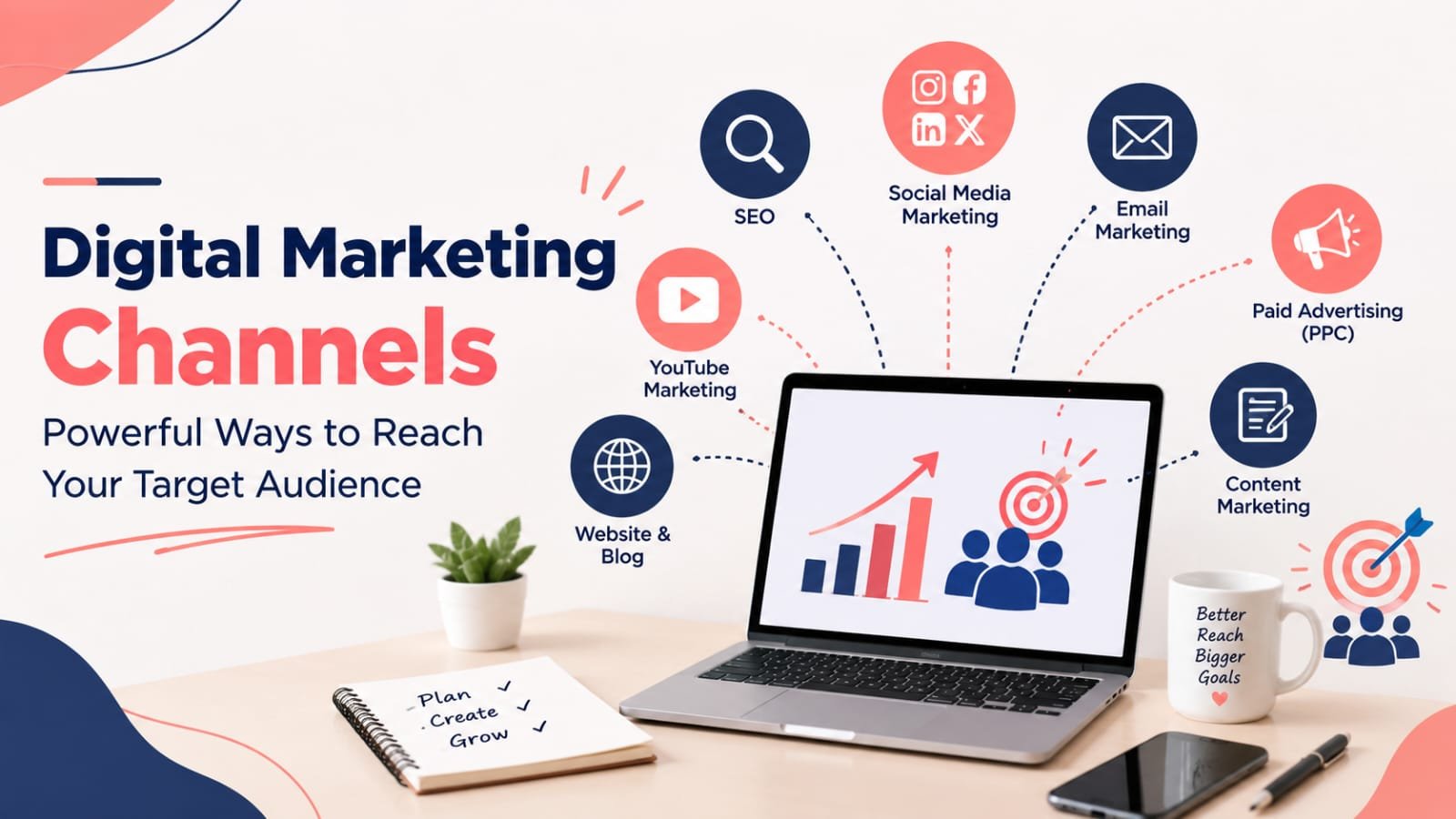
Digital Marketing Channels: 15 Powerful Ways to Reach Your Target Audience
In today’s digital world, businesses have more opportunities than ever to connect with potential customers. However, simply being present online is not enough. Businesses need to choose the right digital marketing channels, understand their customers, and create relevant content that reaches people at the right time. Whether you run a small business, a startup, or an established company, understanding how to target your audience can help you generate more traffic, build brand awareness, attract qualified leads, and increase conversions. Digital marketing channels provide different ways to communicate with potential customers. Search engines can help people discover your business, social media can help you build relationships, email marketing can help you nurture leads, and content marketing can establish your brand as a trusted source of information. The key is not to use every channel simply because it is available. Instead, you should identify where your audience spends time online and select channels that support your business goals. In this guide, we will explore 15 powerful digital marketing channels and explain how each one can help you target your audience, build visibility, and grow your business online. What Are Digital Marketing Channels? Digital marketing channels are online platforms, methods, and communication tools that businesses use to promote their products, services, content, or brand. Some of the most common digital marketing channels include: Search engine optimization (SEO) Content marketing Social media marketing Email marketing Pay-per-click advertising Video marketing Influencer marketing Affiliate marketing Local SEO Online communities Mobile marketing Display advertising Remarketing Webinars and online events Online reviews and reputation management Each digital marketing channel has a different purpose and can reach customers at different stages of their buying journey. For example, SEO can help you target your audience when they are actively searching for information, while social media can help you introduce your brand to people who may not know about your business yet.Choosing the right combination of digital marketing channels allows you to create a more effective digital marketing strategy. 15 Powerful Digital Marketing Channels to Reach Your Target Audience 1. Search Engine Optimization (SEO) Search engine optimization is one of the most important digital marketing channels for businesses that want to attract organic traffic from search engines. SEO involves optimizing your website and content so that search engines can understand your pages and show them to people searching for relevant information. For example, if someone searches for “digital marketing consultant for small business,” a well-optimized website can appear in the search results for that query. SEO can help you target your audience based on their search intent. You can create content around the questions, problems, and keywords your potential customers are already searching for. Important areas of SEO include keyword research, on-page optimization, technical SEO, content optimization, internal linking, and link building. The biggest advantage of SEO is that it can generate consistent organic traffic over time. However, SEO requires patience, regular content creation, and continuous optimization. If your goal is to target your audience while building long-term visibility, SEO should be an important part of your digital marketing strategy. 2. Content Marketing Content marketing focuses on creating and distributing useful, relevant, and valuable content for your target customers. Blog posts, guides, case studies, infographics, ebooks, videos, and tutorials are common examples of content marketing. Instead of directly promoting a product or service in every piece of content, businesses can provide information that helps their audience solve problems. For example, a digital marketing consultant could create articles about SEO, social media marketing, content marketing, website optimization, and online business growth. The better you understand your audience, the easier it becomes to target your audience with content that answers their questions. Before creating content, ask: What problems does my audience have? What questions are they asking? What information are they searching for? What type of content do they prefer? What stage of the buying journey are they in? When content is created around these questions, it becomes more useful and relevant. 3. Social Media Marketing Social media marketing allows businesses to connect with customers through platforms such as Instagram, Facebook, LinkedIn, YouTube, and other social networks. Social media can be used for brand awareness, engagement, lead generation, customer communication, and website traffic. One of the major advantages of social media is the ability to target your audience based on interests, demographics, behaviors, location, and other characteristics. For example, a local business can create content specifically for people in its service area. A B2B company may focus more heavily on LinkedIn, while a visually focused brand may benefit from Instagram or Pinterest. The key to successful social media marketing is consistency. Instead of posting random promotional content, create content that educates, entertains, informs, and engages your audience. 4. Email Marketing Email marketing is one of the most effective channels for communicating directly with people who have already shown interest in your business. Businesses can use email to share newsletters, educational content, product updates, special offers, event invitations, and personalized recommendations. Email marketing allows you to target your audience based on their previous interactions with your business. For example, you can create different email campaigns for: New subscribers Existing customers Potential customers Repeat buyers People who abandoned their shopping carts People interested in a particular product Personalization can make email campaigns more relevant and increase engagement. Instead of sending the same message to everyone, segment your audience and deliver information that matches their interests and needs. 5. Pay-Per-Click Advertising (PPC) Pay-per-click advertising allows businesses to display paid advertisements on search engines and other digital platforms. Unlike SEO, which generally takes time to build organic visibility, PPC can provide immediate visibility when campaigns are properly configured. Businesses can target your audience through keywords, location, demographics, interests, devices, and other targeting options depending on the advertising platform. For example, a business selling digital marketing services in Bangalore could create advertisements specifically for people searching for digital marketing services in that location. PPC can be particularly useful when you want to generate traffic, leads, sales, or
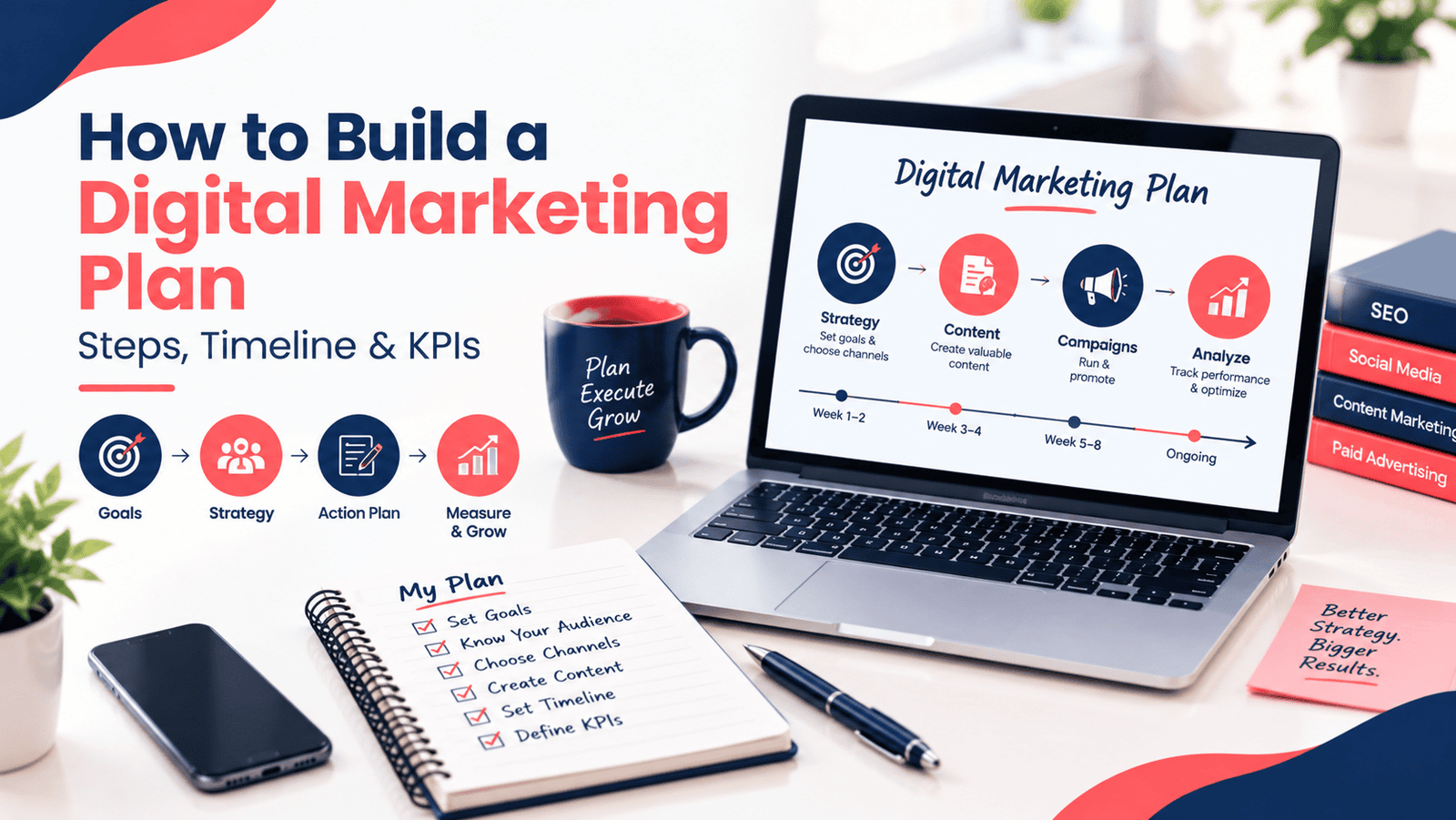
How to Build a Successful Digital Marketing Plan: 15 Powerful Steps, Timeline & KPIs
A successful digital marketing strategy gives your business direction, but a digital marketing plan turns that strategy into clear and achievable actions. It helps you decide what needs to be done, when it should be done, who you want to reach, and how you will measure progress. Without a structured plan, businesses may spend time creating content, running campaigns, or using different digital channels without knowing whether those activities are actually contributing to their goals. A well-developed digital marketing plan creates a roadmap that connects your business goals, target audience, content, marketing activities, timeline, and performance measurement. In this guide, you’ll learn how to build a digital marketing plan step by step, create a realistic timeline, choose the right KPIs, and continuously improve your plan based on results. What Is a Digital Marketing Plan? Having a digital marketing strategy gives your business direction, but direction alone isn’t enough. You also need a clear plan that explains what needs to be done, when it should be done, who is responsible, and how success will be measured. A digital marketing plan turns your broader strategy into practical actions. It helps you organize your marketing activities, prioritize tasks, allocate resources, create timelines, and track performance. Whether you’re a small business, startup, freelancer, or established company, a structured digital marketing plan can help you stay focused and make your online marketing efforts more consistent. If you haven’t developed your overall strategy yet, start with our guide to [Digital Marketing Strategy for Business Growth]. A digital marketing plan is a practical roadmap that outlines the specific marketing activities a business will implement to achieve its goals. While a strategy establishes the overall direction, a digital marketing plan focuses on execution. A digital marketing plan typically includes: Marketing goals Target audience Marketing priorities Content activities Marketing channels Budget Timeline Responsibilities Key performance indicators Measurement and optimization In simple terms: Strategy tells you where you want to go. A plan explains how you’re going to get there. Digital Marketing Strategy vs Digital Marketing Plan It’s important to understand the difference between the two. Digital Marketing Strategy Digital Marketing Plan Defines overall direction Defines specific actions Explains what and why Explains how and when Focuses on long-term direction Focuses on execution Identifies priorities Organizes tasks Defines the approach Creates timelines Establishes strategic goals Tracks KPIs and results For example: Your strategy might be: Build organic visibility and attract qualified customers through useful online content. Your plan might be: Publish two educational articles per month, optimize existing pages, monitor organic traffic, and review lead generation every month. That’s the difference between having a direction and having a practical roadmap. Step 1: Define Your Digital Marketing Goals Before creating individual tasks, decide what you want your digital marketing efforts to achieve. Your goals should connect directly to your business objectives. Common digital marketing goals include: Increase website traffic Generate qualified leads Increase enquiries Improve online visibility Generate more sales Increase brand awareness Improve website conversions Reach a new audience Increase customer retention Instead of creating vague goals such as: “Get more customers.” make them more specific. For example: “Increase qualified website leads over the next six months.” Clear goals make it easier to determine which activities belong in your marketing plan Step 2: Identify Your Target Audience Your marketing plan should clearly identify who you’re trying to reach. Use your audience research to define: Who your ideal customers are What problems they have What they need What questions they ask How they search for information What influences their decisions What prevents them from purchasing This information will influence your content, messaging, marketing channels, and campaigns. Your marketing activities should be built around your audience rather than simply around what your business wants to promote. Step 3: Choose Your Marketing Channels You don’t need to use every digital marketing channel available. Choose channels based on: Your target audience Business goals Available resources Budget Content capabilities Expected results Depending on your business, your plan could include channels such as: Search engines Website content Social media Email marketing Online advertising Video content Local online presence The important thing is to choose channels strategically. For example, if your audience frequently searches for solutions online, building useful search-focused content may be an important part of your plan. Step 4: Plan Your Content Content is often an important part of a digital marketing plan. Instead of deciding what to publish at the last minute, create a content schedule. Your content plan could include: Blog posts Educational articles that answer customer questions. Website contentPages that explain your business, products, services, or solutions. Social media content Posts designed to educate, engage, or build awareness. Visual content Infographics, graphics, videos, and other visual formats. Supporting content FAQs, guides, checklists, case studies, and other useful resources. Your content should support your goals and customer journey. Step 5: Create a Content Calendar A content calendar turns your content ideas into scheduled activities. For example: Week Content Activity Goal Week 1 Educational blog Awareness Week 2 Social media content Engagement Week 3 Blog/guide Consideration Week 4 Conversion-focused content Leads You can expand this into a monthly or quarterly calendar. A content calendar helps you: Stay consistent Avoid last-minute content creation Organize topics Coordinate different channels Track publishing Connect content with business goals Step 6: Assign Tasks and Responsibilities A marketing plan becomes more effective when everyone knows what needs to be done. For each activity, identify: What needs to be done? Who will do it? When should it be completed? What resources are required? For example: Activity Responsibility Frequency Blog research Content creator Monthly Blog publishing Website manager Monthly Social content Marketing team Weekly Performance tracking Marketing manager Monthly If you’re managing your marketing yourself, you can still use this structure to organize your own workload. Step 7: Set a Digital Marketing Timeline A timeline turns your plan into a sequence of activities. You can organize your marketing plan into: 30-Day planFocus on preparation and foundational activities. Define goals Research audience
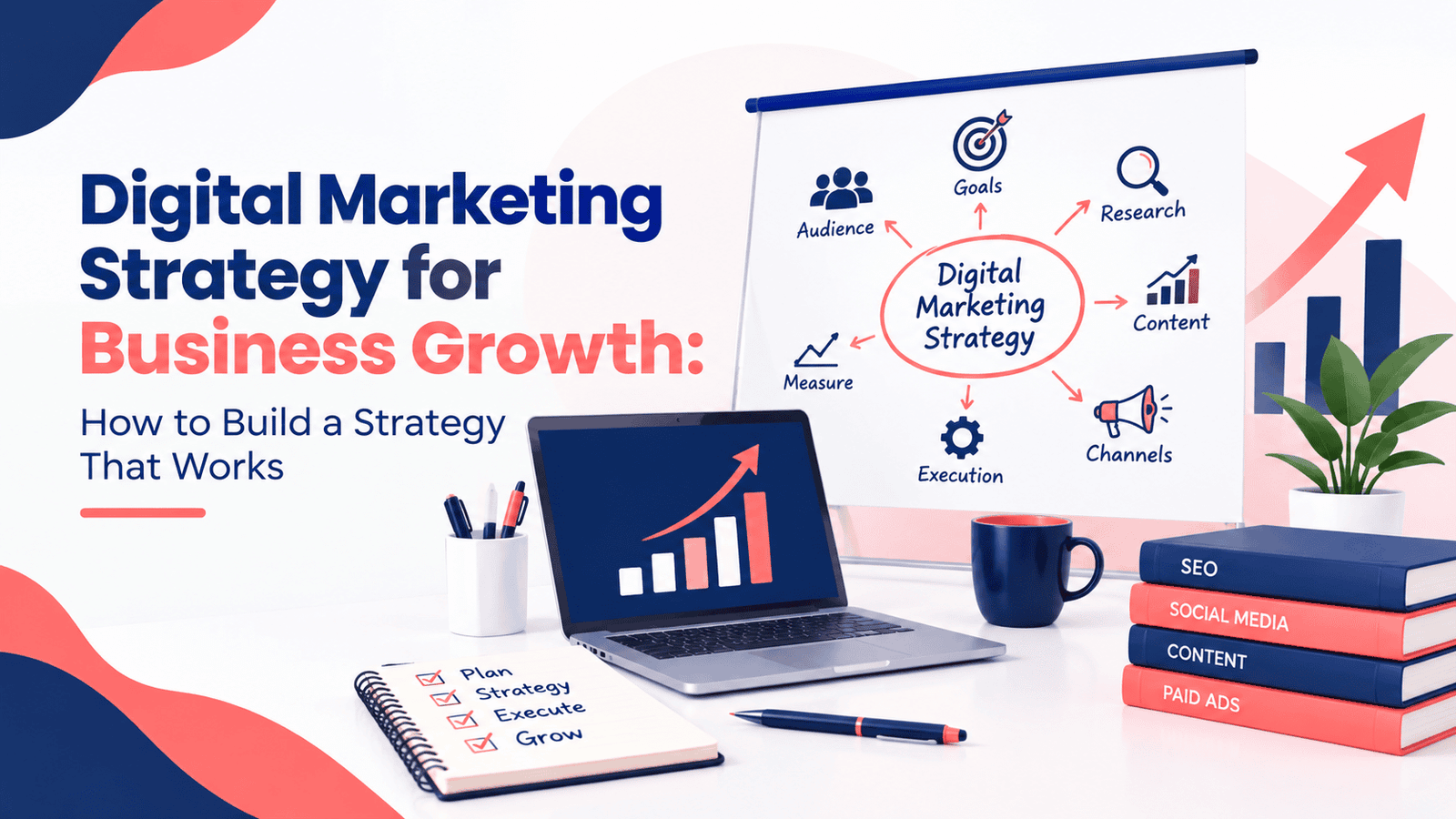
Digital Marketing Strategy for Business Growth: 15 Steps On How to Build a Strategy That Works
In today’s digital marketplace, having an online presence is no longer enough. Businesses need a clear direction to attract the right audience, build trust, generate customers, and achieve sustainable growth. A digital marketing strategy for business growth provides that direction. It helps businesses understand their goals, target audience, customer journey, competitors, and marketing priorities before deciding what actions to take. Instead of trying different marketing activities without a clear purpose, a strategic approach allows businesses to make informed decisions and focus their resources where they can have the greatest impact. What Is a Digital Marketing Strategy? A digital marketing strategy is a structured approach that connects your business goals with your online marketing activities. It answers important questions such as: What does the business want to achieve? Who are the ideal customers? What problems are customers trying to solve? How do potential customers find the business? What makes the business different from competitors? Which marketing activities should be prioritized? How will success be measured? A strategy provides the overall direction for your digital marketing efforts. Your digital marketing plan then turns that strategy into specific actions, timelines, and priorities. Why Is Digital Marketing Strategy Important for Business Growth? Without a clear digital marketing strategy, businesses may spend time and money on different online activities without understanding how those activities contribute to business growth. A well-defined digital marketing strategy helps you: Focus on the right audience Set realistic marketing goals Prioritize marketing activities Use your resources effectively Create consistent messaging Understand the customer journey Measure meaningful results Identify opportunities for improvement The goal isn’t simply to become more visible online. The goal is to turn online visibility into meaningful business outcomes such as leads, customers, sales, and long-term growth. 1. Start With Clear Business Goals Your digital marketing strategy should begin with your business objectives. Ask yourself: What do I want my business to achieve? Your goals could include: Increasing qualified leads Generating more enquiries Increasing sales Building brand awareness Reaching a new audience Improving customer retention Increasing website conversions Growing your online customer base For example, instead of saying: “I want more website traffic.” a stronger objective would be: “I want to attract more qualified visitors who are likely to become customers.” This gives your digital marketing strategy a clear direction. 2. Understand Your Target Audience The next step is understanding who you want to reach. Your target audience isn’t simply a group defined by age or location. You should understand their: Problems Needs Interests Goals Search behavior Buying motivations Concerns Decision-making process For example, if your target audience is small business owners, they may be looking for ways to: Generate more customers Increase online visibility Compete with larger businesses Build credibility Improve their online presence Understanding these needs allows you to create a strategy that focuses on what your customers actually care about. 3. Understand the Customer Journey Customers usually don’t go directly from discovering a business to becoming a customer. They may move through several stages: Awareness → Consideration → Decision → Conversion → Retention At the awareness stage, someone may be searching for information. During consideration, they may compare different solutions. At the decision stage, they may look at pricing, reviews, credibility, and other factors. Your digital marketing strategy should consider each stage. For example: Awareness: Educational content Consideration: Guides, comparisons, case studies Decision: Service information, reviews, FAQs Conversion: Contact forms, enquiries, purchases Retention: Follow-up communication and useful content This helps create a more complete customer experien 4. Research Your Competitors Competitor research can help you identify opportunities. Look at: Their websites Content Marketing messages Target audience Online visibility Customer reviews Strengths Weaknesses You don’t need to copy what competitors are doing. Instead, ask: What are they doing well? Where are they missing opportunities? What questions are they not answering? How can my business provide more useful information? These insights can help you develop a strategy that differentiates your business. 5. Choose Your Digital Marketing Priorities A common mistake is trying to do everything at once. A better strategy is to determine which activities are most relevant to your goals and audience. Consider: Your business objectives Target audience Budget Available resources Competition Current online presence Expected business impact For example, a new business may need to focus on building awareness and credibility, while an established business may need to focus more heavily on generating qualified leads and improving conversions. Your strategy should be based on business needs, not simply on what’s trending. 6. Create Content Around Your Audience’s Needs Content should support your overall strategy. Instead of publishing content simply to have something new on your website, create content that answers your audience’s questions. You can organize content around different stages of the customer journey. Awareness What is digital marketing? How can a business grow online? Digital marketing trends Consideration How to create a digital marketing strategy Digital marketing strategies for small businesses How to choose the right marketing approach Decision How to choose a digital marketing consultant Questions to ask a digital marketing consultant How to measure digital marketing results This creates a content system that supports customers throughout their journey. 7. Turn Your Strategy Into a Digital Marketing Plan A strong digital marketing strategy gives your business direction, but the next step is turning that strategy into an actionable plan. A digital marketing plan helps you organize your activities, establish a realistic timeline, prioritize your actions, and determine how you will measure progress. If you want to learn how to turn your strategy into an actionable roadmap, read our guide on [How to Build a Digital Marketing Plan: Steps, Timeline & KPIs]. Once you have established: Your business goals Target audience Customer journey Competitor insights Marketing priorities Content direction you need to turn those decisions into specific actions, want to know about how to plan digital marketing. This is the difference between a strategy and a plan. Strategy answers : “Where do we want to go and why?” Plan answers:
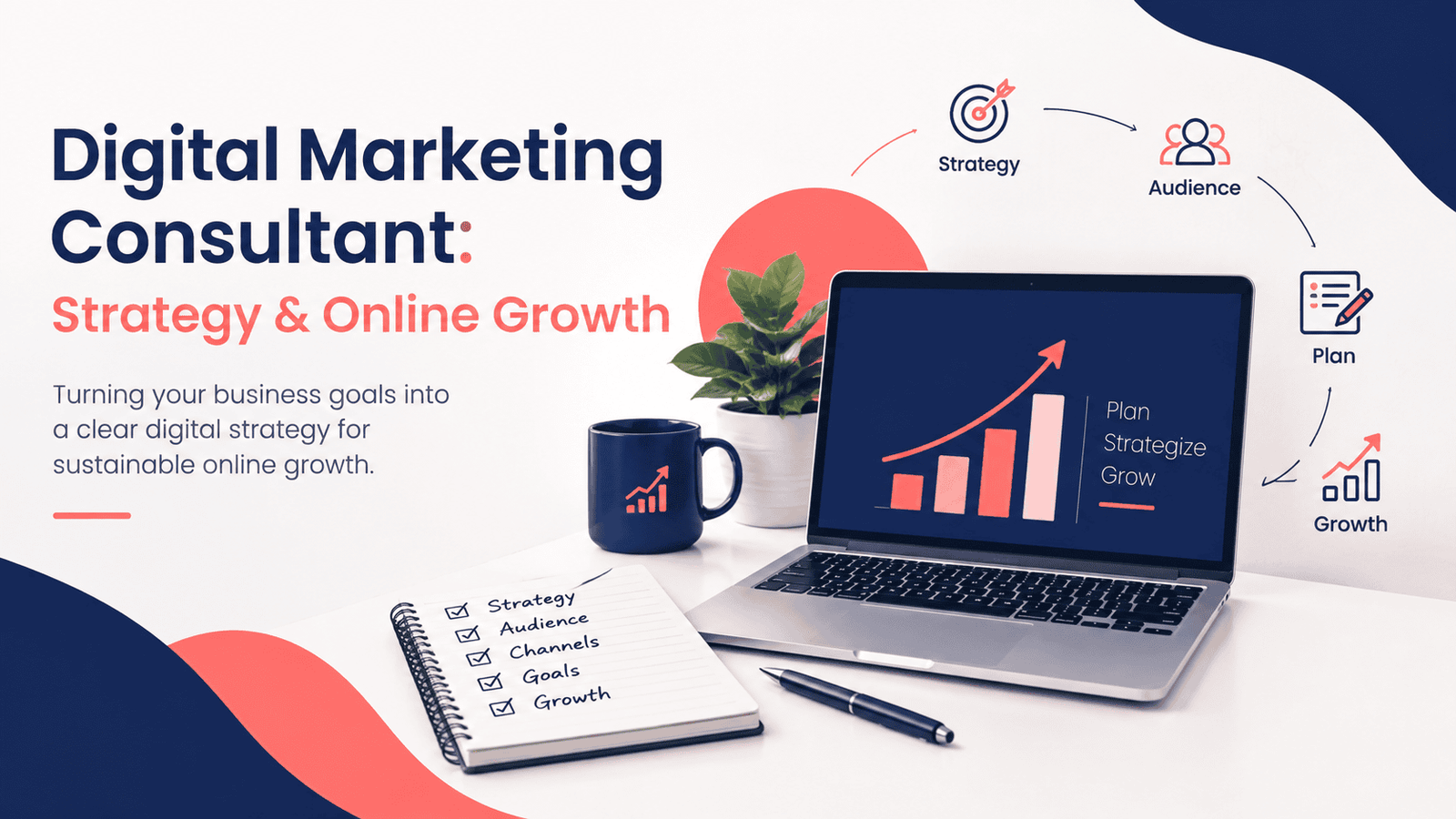
Digital Marketing Consultant: Powerful Strategies for Amazing Online Growth
Businesses today need more than just an online presence. They need a clear digital marketing strategy that connects their business goals with the needs of their target audience. A digital marketing consultant helps businesses understand where they are online, identify opportunities for growth, and develop a strategic approach to reaching the right customers. Instead of focusing on individual marketing activities in isolation, a consultant looks at the bigger picture and helps create a structured path toward sustainable online growth. A digital marketing consultant is a professional who helps businesses improve their online presence, attract the right audience, generate leads, and achieve measurable business growth through digital marketing strategies. Rather than focusing on just one marketing channel, a consultant looks at the business as a whole and develops a strategy based on its goals, audience, competition, and online performance. What Is a Digital Marketing Consultant? A digital marketing consultant is a professional who helps businesses plan, develop, and improve their digital marketing approach. The role is not simply about promoting a business online. It involves understanding the business, its audience, competitors, goals, customer journey, and existing online presence before deciding what should be prioritized. A consultant can help businesses answer important questions such as: Who are our ideal customers? What are our main business goals? How do potential customers find us online? What influences their purchasing decisions? Which digital marketing activities should we prioritize? How should we measure our progress? How can we improve our online growth over time? Having clear answers to these questions creates a stronger foundation for digital marketing decisions. How to Choose a Digital Marketing Consultant When evaluating a consultant, businesses can consider: Experience and expertise: Look at their experience with businesses or industries similar to yours. Understanding of business goals: A good strategy should be connected to the company’s actual objectives rather than focusing only on individual marketing metrics. Strategic approach: Ask how they research the audience, competitors, market, and existing online performance before recommending actions. Measurement and reporting: Find out which KPIs they use and how they communicate progress. Communication: Clear communication is important because digital marketing often requires ongoing testing and adjustments. What Does a Digital Marketing Consultant Do? A digital marketing consultant can work across different areas of online marketing, depending on the needs of the business. 1. Understand Business Goals The first step is understanding what the business wants to achieve. Goals may include increasing brand awareness, generating leads, improving online visibility, increasing website conversions, reaching a new audience, or growing revenue. Marketing activities should support these business objectives rather than operate independently. 2. Analyze the Existing Online Presence A consultant evaluates the company’s current digital presence. This may include the website, search visibility, social media presence, content, advertising campaigns, analytics, and conversion paths. This analysis helps identify what is working, what needs improvement, and where new opportunities may exist. 3. Research the Target Audience Understanding the audience is an important part of developing an effective digital marketing strategy. A consultant may research: Customer needs and problems Search behavior Interests Buying motivations Online platforms Customer journey Common questions and objections This information can help businesses create more relevant content and marketing messages. 4. Research Competitors Competitor research helps businesses understand how other companies are positioning themselves online. A consultant may examine competitors’: Websites Content Search visibility Social media activity Advertising approaches Target audiences Marketing messages The goal is not simply to copy competitors, but to identify opportunities for differentiation and improvement. Why Continuous Optimization Matters Digital marketing is not a one-time activity. Search behavior, customer preferences, competitors, platforms, and market conditions can change over time. A consultant can use performance data to identify what should be improved and what should be tested. The process can be: Measure → Analyze → Improve → Test → Measure Again This creates a continuous improvement cycle. Why Is a Digital Marketing Strategy Important? Without a clear strategy, businesses may spend time and money on marketing activities that do not contribute directly to their objectives. A well-planned strategy helps businesses understand what they want to achieve, who they want to reach, which channels they should prioritize, and how they will measure success. A digital marketing strategy can help businesses: Establish clear marketing objectives Understand their target audience Identify suitable digital channels Create consistent marketing messages Prioritize marketing activities Allocate resources more effectively Measure marketing performance Identify opportunities for improvement Why Digital Marketing Strategy Matters Without a strategy, businesses may spend time and money on different online activities without knowing whether they are contributing to meaningful results. A strategy provides direction. It connects business objectives with marketing goals and creates a framework for making better decisions. For example, a business focused on increasing leads may need a different approach from a business focused primarily on building brand awareness. A well-developed digital marketing strategy for business growth should consider the business objectives, target audience, customer journey, competition, available resources, and measurable outcomes. This allows businesses to focus their efforts instead of trying to do everything at once. Business goal -> Target audience-> Digital Strategy-> Action Plan-> Measurement-> Online growth. Strategy vs Digital Marketing Plan t’s useful to clarify the difference on your pillar page: Digital marketing strategy explains the overall direction and approach. Digital marketing plan explains how that strategy will be put into action, including activities, timelines, responsibilities, and KPIs. This distinction is particularly useful for your pillar because it lets you link naturally to both of your cluster articles without making the pillar and clusters repetitive. Digital Marketing Consultant vs Digital Marketing Agency These terms are related but don’t necessarily describe the same type of working relationship. A digital marketing consultant generally focuses on strategic advice, analysis, planning, recommendations, and direction. A digital marketing agency typically operates as a team that may provide strategy as well as execution across multiple marketing services. The right option depends on the business’s requirements, internal resources, budget, and preferred level of external support. How to Choose a Digital Marketing